


The common themes are tissue repair, inflammation reduction, and recovery. That one addition is the whole difference, so the question is whether inflammation control is part of your problem. It’s GHK-Cu, BPC-157, and TB-500 in one vial, and it’s still the more common blend.
Reaching a given working concentration requires different maths than with Glow, and carrying over a Glow protocol unchanged is a straightforward way to end up off-target. Our GHK-Cu dosage guide covers the copper-load arithmetic in more detail. Reconstitution volume matters more with Klow because of the higher peptide load.
The clearest quantitative signal present in this literature serves as the lens through which the KLOW research record is interpreted by this site. Limited human data contrasts with the strongest evidence found in animals within this body of literature. Compared to the simpler GLOW blend, KLOW’s inclusion of the additional anti-inflammatory peptide KPV enhances its benefits related to gut health and inflammation. Reports of early changes such as reduced inflammation and more consistent energy often emerge within a span of two to three weeks, whereas benefits for skin and recovery typically require six to twelve weeks to become apparent.
The issue with the blend: confirm all four elements
The practical significance of that theoretical advantage remains unknown, as no comparative studies are available. All claims regarding “synergy” among these four peptides are speculative, based on their individual mechanisms and lacking validation in published experiments. The evidence profile for each of these peptides is distinct, which we discuss in the individual guides linked above. We examined the scientific support, the gaps in it, and essential information you should have before using a pre-mixed blend. This comparison reveals how they stack up against each other, along with what the literature indicates and omits regarding their combination. We evaluated leading suppliers to assist you in locating a high-quality, lab-tested product.
Timeline: What to Expect
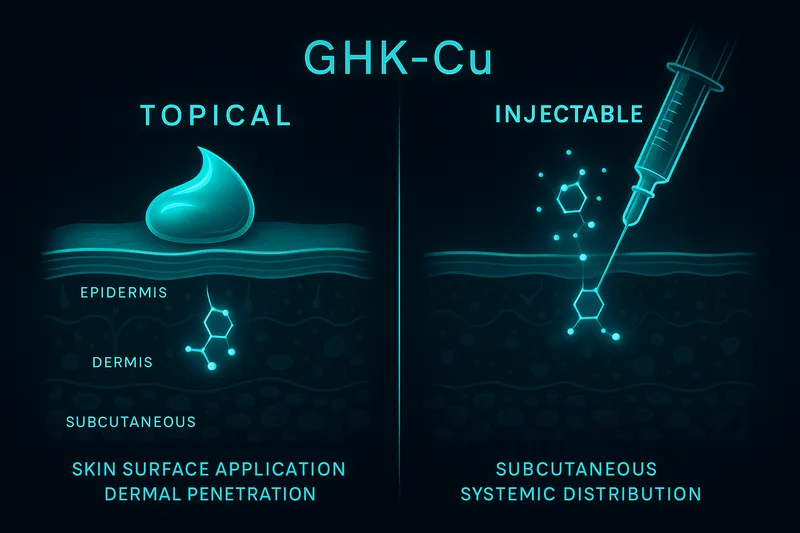
Ratios are conventional rather than standardised and vary between suppliers, so check the certificate of analysis. The standard 80 mg vial contains 50 mg GHK-Cu, 10 mg BPC-157, 10 mg TB-500 and 10 mg KPV, meaning GHK-Cu alone is 62.5% of the total mass. It is sold for laboratory MOTS-c peptide topics explained research use only, is not approved for human use anywhere, and has no established therapeutic application. The skin and collagen claim has the strongest support. Material sold as KLOW today remains labelled for laboratory research use only, a classification that governs how a product may be marketed and is neither a quality guarantee nor a safety assessment. These are mechanistic hypotheses rather than established causal links.
They are not sterility results, not endotoxin results, and not evidence of what the compound does in a person. Middleway Nutrition doesn’t sell it either — this is a sourcing and verification guide, not a store. That also means there’s no clinician overseeing quality or safety for you — the verification responsibility falls entirely on you and the vendor’s documentation.
Variations in component ratios may occur even among two vials both labeled 80mg from different suppliers, highlighting that the breakdown of components is more crucial than the headline figure. Common searches for “klow 80mg” and “klow 80” often lead to confusion surrounding the number. This guide discusses the contents of KLOW, the mechanics of the 80mg labeling, the distinctions from the GLOW blend, and how to verify purity prior to sourcing. The standard 80mg formulation consists of GHK-Cu 50mg, KPV 10mg, BPC mg, and TB mg.
Because each blend has a fixed ratio, any amount you draw sets the dose of every component at once, which is why some people prefer separate vials. Educational links only — compare mechanisms, calculators, and compound profiles. There is no trial-established dose or schedule for KLOW. Don’t adjust a protocol from a forum thread. Animal and cell data can be real without telling you whether a blend works, or is safe, in people at the amounts sold online.
Whether any use is appropriate is a question for a qualified healthcare professional. No clinical before and after results exist for the Klow blend itself. Klow Peptide is a blend of four bioactive peptides (BPC-157, TB-500, GHK-Cu, and KPV) designed for tissue recovery, inflammation reduction, and anti-aging support.
If a protocol calls for higher concentrations of the base trio, using Klow alone is the more controlled way to get there, since the ratios are fixed and known. If a research question does not involve inflammatory pathways, KPV is not adding much to the design, which is the honest case for using Glow rather than Klow. The practical implication is that Klow extends the blend’s research surface toward inflammatory and gut-related questions, while Glow stays focused on the repair-and-remodelling combination of its three components.
For anyone running a multi-week protocol, that difference is real and immediate, and it is probably the single largest driver of KLOW’s popularity. The blends most often compared with it share a backbone. Whether that division survives contact with real pharmacology is unproven, but it is the reason people give for running both rather than picking one. This is the framing that appears most often across vendor guides, clinic write-ups and forum threads. When marketing runs ahead of user reports, that gap is informative.
Ask PeptIQ
KLOW Research is for readers trying to understand what KLOW peptide means and what the research can support. This guide follows chemical identity, then the evidence, then its limits. The research pages keep the substance, route and study setting beside each result. It does not demonstrate that the mixture works better, lasts longer, or has a predictable safety profile in people. A tendon experiment, a skin-cell study and an intestinal model ask different questions. The safety page also explains the questions raised by copper and immune signaling.
But so are the questions it raises about stability, quality control, and whether a blend that has never been studied as a combination deserves the confidence the internet is giving it. This guide details the composition of Klow Peptide, the mechanisms of action of each component, the rationale behind their combination, and the potential applications identified by research. The blend’s four-peptide design makes it a broader option compared to single-peptide therapies, though most of the supporting evidence still comes from early-stage or animal research rather than large human trials.
The combination of BPC-157 and TB-500 “did not provide additional benefits compared to either agent utilized alone” (Biçer 2026). A search conducted on PubMed on October 22, 2026, yielded no results for the combination of BPC-157 and KPV. No published studies testing all four ingredients of KLOW together have been found in either animal or human research. This concept originates from animal studies and remains unverified in human subjects. In a randomized, double-blind study, a GHK-Cu serum was applied by 40 women aged 40 to 65 over a period of 8 weeks.